Training the Brain Through the Body: How Movement Practices Like Martial Arts & Yoga Enhance Mental Clarity

When most people think about improving mental clarity, focus, or emotional regulation, they often start with the mind.
But what if the path to clearer thinking… begins in the body?
At Clarity Integrated Wellness, we often explore how physical practices—particularly those rooted in intention, breath, and awareness—can profoundly influence how the brain functions. Practices like yoga and martial arts are not just forms of exercise. They are forms of neurological training.
When the body moves with intention, the brain changes. New neural pathways are created. We can see it visually in fMRIs.
More Than Movement: Engaging the Whole Brain
Practices like yoga and martial arts allow for increased neural network connections and functionality.
Rather than isolating one area of the brain, they create coordination across several key systems, including:
Attention networks
Stress response systems
Memory circuits
Large-scale brain connectivity, specifically cross-hemisphere communication and functioning
This integration is driven by a powerful combination:
Movement + Breath Regulation + Focused Attention
Together, these elements create what neuroscience refers to as functional connectivity, orthe ability of different regions of the brain to communicate more efficiently with one another.
Instead of operating in fragmented ways, the brain begins to work more cohesively. This has been found to be true with musicians, visual artists, and many other creative activities.
Strengthening the Brain’s Regulation Centers
Research has shown that individuals who regularly engage in practices like yoga and martial arts demonstrate stronger connections in key areas of the brain responsible for regulation and decision-making. These activities have also been efficacious in helping clients recover from eating disorders, abuse, and trauma, cultivating grounding, strength, healing, presence, connection, and trust.
Specifically:
● The ventrolateral prefrontal cortex (involved in emotional regulation and response control); and
● The dorsolateral prefrontal cortex (responsible for executive functioning, planning, and focus)
These regions play a critical role in how we respond to stress, manage impulses, and stay grounded under pressure (Barros-Loscertales et al., 2021).
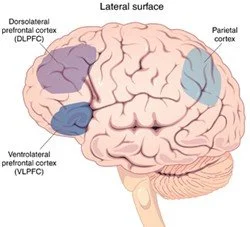
Studies have also shown that these practices may contribute to increased overall grey matter in the brain, supporting long-term cognitive health and resilience (Hernandez et al., 2020).
In simple terms:
These are not just physical disciplines. They are strengthening the very parts of the brain that help us navigate life more efficiently.
Improving Focus, Memory, and Self-Control
Beyond structural changes, consistent practice also supports improvements in key cognitive functions.
Individuals who engage in yoga or martial arts often experience:
Improved concentration
Greater self-control
Enhanced memory
Stronger overall cognitive function
These benefits are tied to changes in:
Attention networks
Memory systems
Default mode network activity (the part of the brain active during rest and self-reflection)
As these systems become more balanced and integrated, the mind becomes less scattered—and more intentional.
Regulating the Stress Response
One of the most impactful aspects of these practices is their effect on the nervous system.
Through controlled breathing and intentional movement, the body learns how to:
Down-regulate stress responses
Return to baseline more efficiently after activation
Stay present even in moments of intensity
Over time, this builds a greater capacity to tolerate stress without becoming overwhelmed.
This is especially important for individuals who experience anxiety, reactivity, or emotional dysregulation.
The body, in many ways, becomes a training ground for resilience.
Why This Matters for Everyday Life
The benefits of these practices don’t stay on the mat or in the training space. They carry into everyday moments. Over time, you may notice a greater ability to pause instead of react, to stay focused in high-pressure situations, and to communicate with clarity rather than emotion-driven intensity. Decision-making begins to come from a more grounded, regulated place, rather than from urgency or overwhelm.
This is where neuroscience meets real life. As the brain becomes more integrated, so does the way we move through the world.
How Clarity Can Support You
Understanding the connection between the brain and body is just the beginning.
At Clarity Integrated Wellness, we help individuals apply these insights in practical, personalized ways, integrating neuroscience, lifestyle factors, and emotional awareness to create lasting change.
If you’re looking to improve focus, regulate stress, or better understand how your mind and body work together, we invite you to take the next step.
Schedule a consultation and begin building a more grounded, connected, and intentional way of living.