
EEG & Brain Mapping (qEEG)
Understand your brain at a deeper level.
A Clear Look At How Your Brain Is Functioning
In Real Time.
Rather than relying solely on how symptoms feel or present, this process allows us to see the underlying patterns driving them and how different areas of the brain are communicating, where activity may be out of balance, and how those patterns may be impacting your thoughts, emotions, and behavior.
At Clarity Integrated Wellness, this approach allows us to move beyond guesswork. It gives us a more precise understanding of why certain symptoms are happening and provides a clear foundation for how to address them in a way that is both targeted and effective.
What Is EEG & qEEG?
EEG (Electroencephalography) measures the electrical activity of your brain in real time.
qEEG (quantitative EEG), often referred to as brain mapping, takes this a step further by comparing your brain’s activity to a database of healthy norms. This allows us to identify patterns that may be overactive, underactive, or out of balance.
Together, EEG and qEEG provide a detailed picture of how your brain is functioning—and where it may need support.
How These Are Helpful
Many symptoms, such as anxiety, difficulty focusing, sleep issues, or emotional dysregulation, are rooted in how the brain is functioning.
EEG and qEEG help us:
Identify patterns of brainwave dysregulation
Pinpoint the root of symptoms
Create a more precise and individualized care plan
Guide neurofeedback training with clarity and intention
Rather than treating symptoms alone, this approach allows us to understand what’s happening beneath the surface and respond accordingly.
A Data-Driven, Personalized Approach
Your data findings are considered alongside your symptoms, experiences, and goals—allowing us to design a care plan that is both clinically informed and personally relevant.
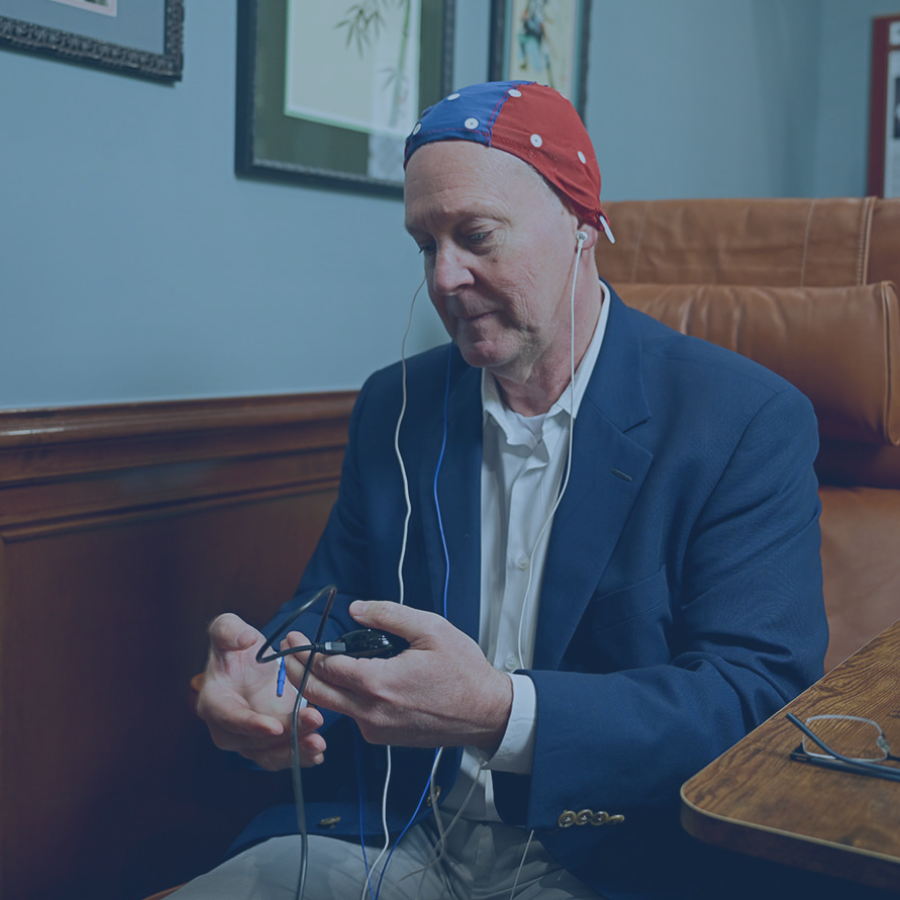
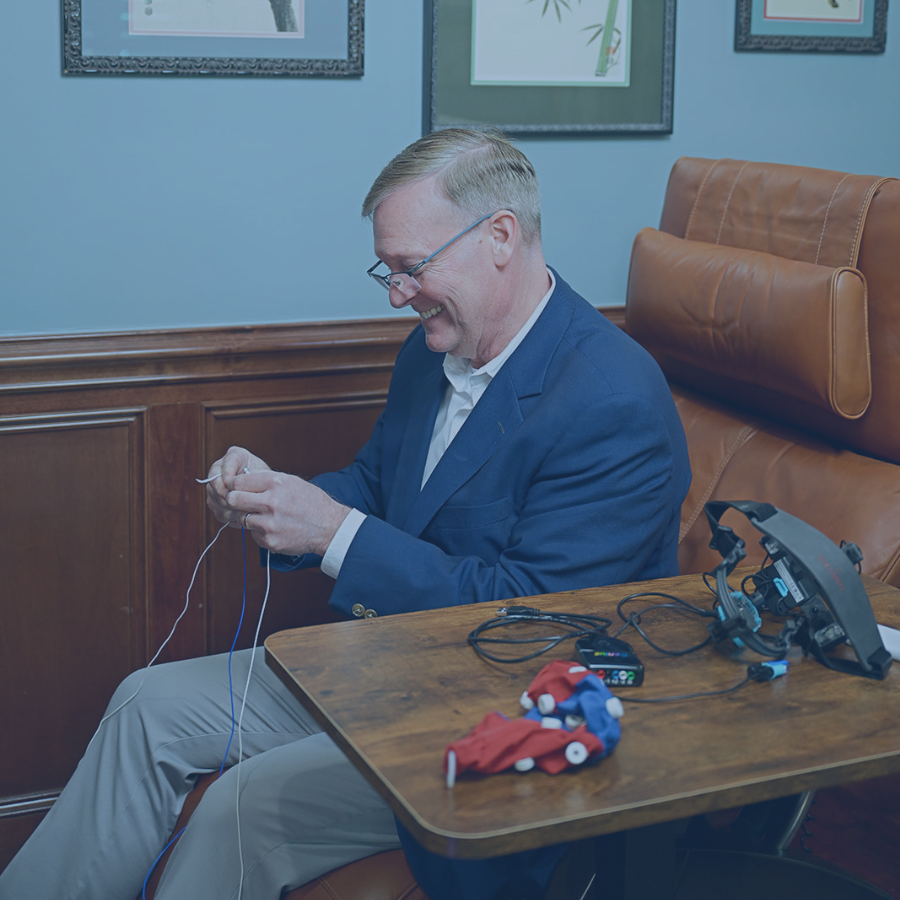
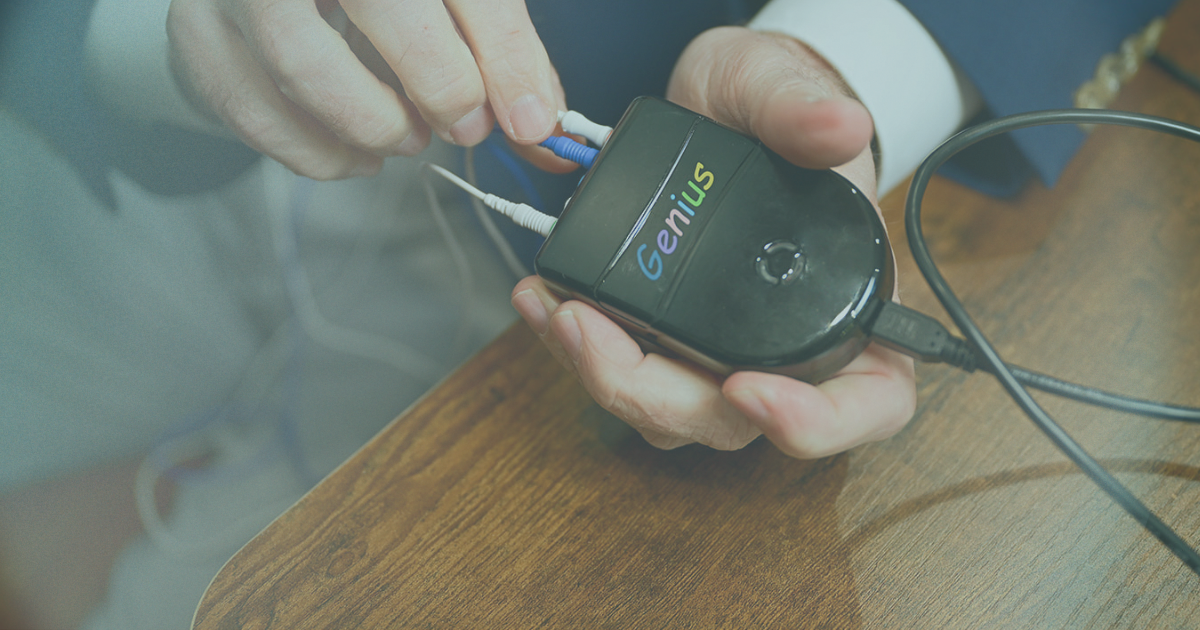
Please note: The equipment shown above is used for neurofeedback, not EEG assessment. However, the cap and overall setup for EEG assessments are very similar in appearance.
What the Process Looks Like
The process is simple and non-invasive.
You’ll be fitted with a comfortable EEG cap containing 19 recording sites
A water-based gel is applied to allow accurate readings
Ear clips will be utilized as part the process
You’ll sit quietly while your brain activity is recorded
The recording lasts approximately 22 minutes:
11 minutes with eyes open
11 minutes with eyes closed
You’ll simply relax and remain still while the system captures your brain’s activity.
EEG/qEEG FAQ’s
-
To ensure accurate results:
Arrive with clean hair and scalp (no products)
Avoid braids or large hairstyles
Eat a protein-rich meal beforehand
Avoid simple sugars and caffeine prior to your session
Continue taking regular medications as prescribed
-
Once complete:
Your data is sent to the neurology team for detailed analysis
They review for patterns, abnormalities, and key biomarkers
A report is typically returned within one week
We meet with you to review results and discuss next steps
This allows us to move forward with clarity and confidence in your care plan.
-
EEG and qEEG assessments are the starting point—they give us a clear picture of how your brain is functioning and where patterns may be out of balance. This information allows us to design a targeted neurofeedback plan based on your specific needs.
After an initial round of neurofeedback and photobiomodulation sessions, a follow-up EEG is completed to measure progress and guide the next phase of training. This process helps ensure that your care is both precise and effective.
Most individuals complete two phases of training (about 40 sessions total), which allows the brain to build and “lock in” healthier patterns. Some people return periodically for maintenance or “tune-up” sessions to support long-term results.
-
Yes. EEG is completely non-invasive.
The sensors only read electrical activity—they do not send anything into your brain. Most people find the process comfortable, with only mild sensitivity possible for those with a sensitive scalp.
-
This assessment is often the first step in creating a more targeted approach to treatment, including neurofeedback and other therapeutic modalities.
By understanding how your brain is functioning, we can:
Reduce trial-and-error in treatment
Focus on what your brain actually needs
Support more effective, lasting change

Clarity begins with understanding. When we have a clear picture of how the brain is functioning, we can approach change with intention, precision, and purpose.
- Larry Lawyer
Take the Next Step Toward Clarity
Understanding your brain is the first step toward changing how it functions.
EEG and qEEG provide the clarity needed to move forward with intention—so your care is not only personalized, but precise.
If you’re ready to gain deeper insight into your brain and how it works, we invite you to schedule a consultation.